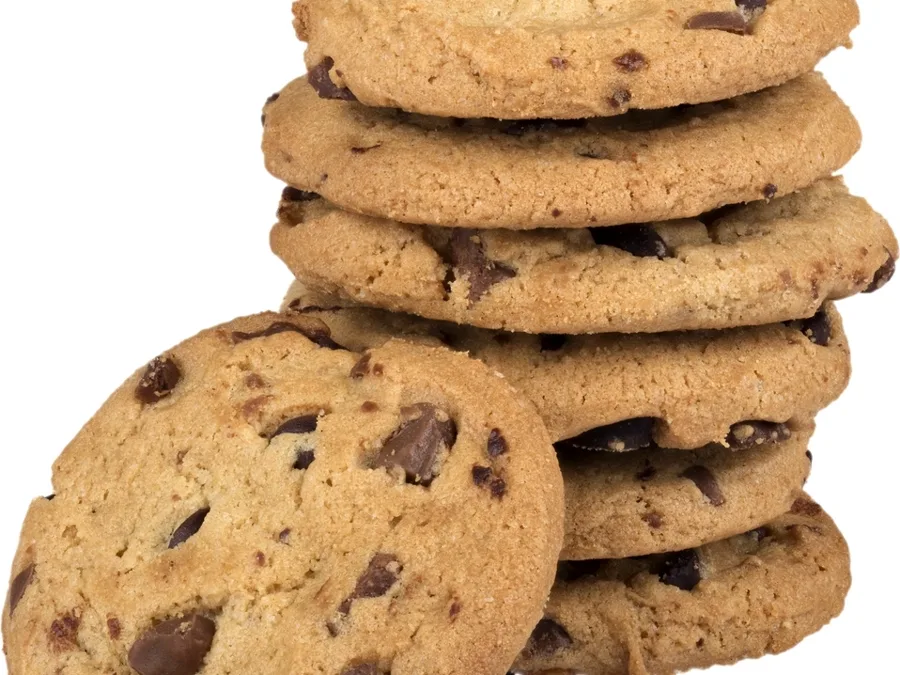
There are thousands of chocolate chip cookie recipes, and the differences that matter come down to four decisions. This recipe makes all four deliberately: more brown sugar than white (for chew and caramel flavour), melted butter (for dense, chewy centres rather than cakey ones), an extra egg yolk (for richness), and a rest in the fridge (for flavour and spread control).
The chill is the step home bakers skip and bakeries never do. Cold dough spreads slowly in the oven, so the edges set before the centre slumps — that is how you get the crisp rim and soft middle in the same cookie. The rest also lets the flour hydrate and the flavours marry; a 24-hour dough genuinely tastes better than a 1-hour one, though both bake well.
The last decision is the pull: these come out of the oven when the centres still look slightly underdone and glossy. They finish cooking on the hot tray as they cool. If they look fully baked in the oven, they will be hard by the time they are cool. Trust the timing, not your eyes.
Why this recipe works
Brown sugar contains molasses, which is hygroscopic — it pulls in moisture and keeps cookies chewy for days. Melted butter coats the flour proteins and limits gluten formation, giving dense chew rather than cake. Chilling resolidifies that butter so the cookies spread slowly in the oven, and the rest period lets flour fully hydrate, which deepens the toffee flavour noticeably.
Ingredients
- 1 cup (225 g) butter, melted and slightly cooled
- 1 cup (200 g) brown sugar, packed
- 1/2 cup (100 g) white sugar
- 1 large egg plus 1 egg yolk, at room temperature
- 2 tsp vanilla extract
- 2.25 cups (280 g) all-purpose flour
- 1 tsp baking soda
- 1 tsp fine sea salt
- 1.5 cups (255 g) dark or semi-sweet chocolate chips (or chopped chocolate)
- Flaky sea salt, for sprinkling (optional)
Quantities are given in cups and grams. Nutrition (≈ 210 kcal and 2g protein per serving) is an estimate calculated from these ingredients.
Method
- Whisk the melted butter with both sugars in a large bowl until smooth and glossy, about 1 minute.
- Whisk in the egg, egg yolk and vanilla until the mixture lightens slightly.
- Fold in the flour, baking soda and salt with a spatula until just combined, then fold in the chocolate chips. Do not overmix.
- Cover and refrigerate the dough for at least 1 hour, ideally 24. (In a hurry, freeze scooped balls for 15 minutes.)
- Heat the oven to 350°F (175°C). Line trays with baking paper. Scoop the dough into balls of about 2 tbsp (40 g) each, spaced well apart.
- Bake 10–12 minutes, until the edges are golden and set but the centres still look soft and slightly glossy.
- Sprinkle with flaky salt if using. Cool on the tray for 10 minutes — they finish setting here — then move to a rack.
Tips for success
- **Chopped chocolate beats chips** for the pools-and-strata effect: a bar cut into rough chunks melts into layers. Chips hold their shape by design (they contain stabilisers).
- **Bang the tray** once, halfway through baking, if you like rippled edges — it deflates the centre and creates the wrinkles.
- **Freeze scooped dough balls** and bake from frozen at the same temperature, adding 1–2 minutes. Fresh cookies on demand, forever.
- **Weigh your flour** if cookies keep coming out cakey — a heavy hand with the cup measure is the usual cause.
Serving and variations
Serve warm with cold milk, or sandwich two around vanilla ice cream. The dough is a base for variations: swap half the chips for chopped walnuts, add orange zest, or use brown butter (cook the butter until nutty and amber before melting the sugars in) for a deeper, bakery-style flavour.
Storage
Baked cookies keep 4 days in an airtight tin (a slice of bread in the tin keeps them soft). Dough balls freeze up to 3 months.
Frequently asked questions
Why do you chill chocolate chip cookie dough?
Chilling solidifies the butter, so the cookies spread slowly and bake up thick with crisp edges and chewy centres instead of thin and greasy. It also hydrates the flour and deepens the flavour — dough rested 24 hours tastes noticeably more caramel-like.
How do I get chewy cookies instead of cakey ones?
Use melted butter, more brown sugar than white, and an extra egg yolk — all three push towards chew. Then underbake slightly: pull the cookies when the centres still look soft. Overbaking is the fastest route to a cakey, dry cookie.
Why did my cookies spread too much?
The dough was too warm, the butter was hot when mixed, or the trays were hot from a previous batch. Chill the dough thoroughly, let trays cool between batches, and check your flour quantity — too little flour is the other classic cause.
Can I make chocolate chip cookies without brown sugar?
Yes — use all white sugar (1.5 cups total) plus 1 tbsp of honey or golden syrup if you have it, to replace some of the lost moisture and caramel flavour. The cookies will be crisper and paler but still good.
Should I use chocolate chips or chunks?
Chunks (from a chopped bar) melt into pools and thin strata through the cookie; chips keep their shape and give distinct bites. Both work — chunks look and eat more 'bakery'. A mixture of the two is the best of both.