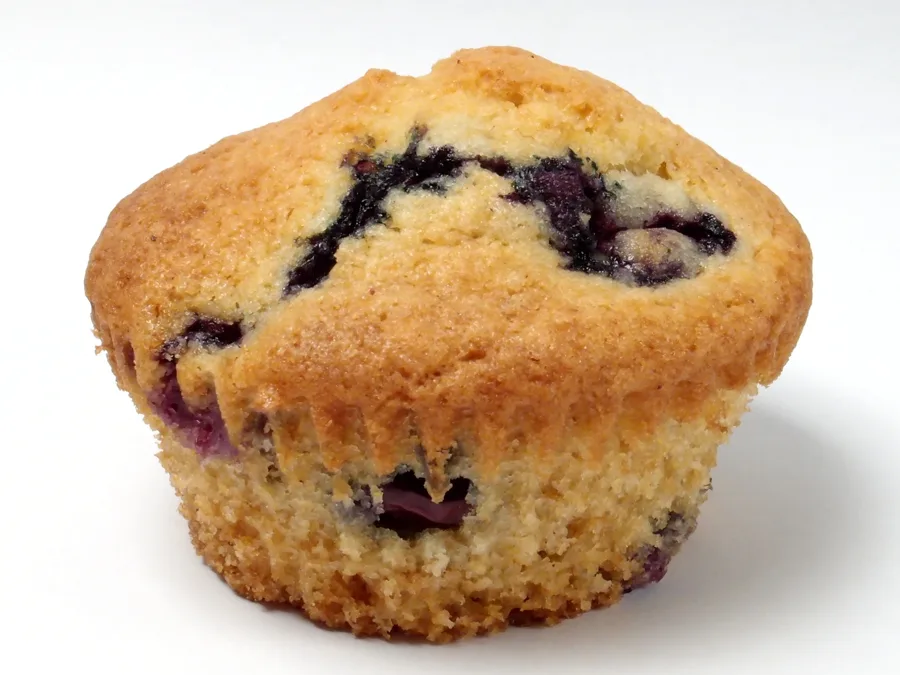
The difference between a bakery muffin and a home muffin is mostly architecture: a tall, domed, slightly crisp top over a tender, berry-studded crumb. That dome is not luck — it is produced by filling the cups almost to the top and starting the bake in a fiercely hot oven, which forces a rapid rise before the temperature drops to finish the centres gently.
The batter itself is a classic oil-and-buttermilk mixture — oil for a crumb that stays moist for days, buttermilk for tenderness and a slight tang that flatters the blueberries. Lemon zest is a small addition with an outsized effect: you won't taste 'lemon', but the berries will taste more like themselves.
One practical trick is worth the whole recipe: toss the blueberries in a spoonful of the flour before folding them in. It sounds like folklore but it works — the light coating grips the batter and keeps the berries suspended instead of sinking into a purple layer at the base.
Why this recipe works
The dome is physics: a hot oven makes the baking powder release its gas quickly, and batter filled high has nowhere to go but up before the crust sets. Dropping the temperature after 5 minutes lets the centres finish without over-browning the tops. Buttermilk's acid reacts with the baking soda for extra lift and weakens gluten slightly, which is why the crumb stays tender.
Ingredients
- 2 cups (250 g) all-purpose flour, plus 1 tbsp for the berries
- 2 tsp baking powder
- 1/2 tsp baking soda
- 1/2 tsp fine sea salt
- 3/4 cup (150 g) white sugar
- 1/2 cup (120 ml) neutral oil (or melted butter)
- 2 large eggs, at room temperature
- 3/4 cup (180 ml) buttermilk (or milk + 2 tsp lemon juice)
- 2 tsp vanilla extract
- 1 tsp lemon zest
- 1.5 cups (225 g) blueberries, fresh or frozen
- 1 tbsp coarse sugar, for the tops (optional)
Quantities are given in cups and grams. Nutrition (≈ 240 kcal and 4g protein per serving) is an estimate calculated from these ingredients.
Method
- Heat the oven to 425°F (220°C). Line a 12-cup muffin tin with paper cases.
- Whisk the flour, baking powder, baking soda and salt in a large bowl. In a second bowl, whisk the sugar, oil, eggs, buttermilk, vanilla and lemon zest until smooth.
- Toss the blueberries with the extra tablespoon of flour until lightly coated.
- Pour the wet mixture into the dry and fold with a spatula until just combined — a few small lumps are fine and correct. Fold in the berries gently.
- Divide the batter among the cups, filling them almost to the top. Sprinkle with coarse sugar if using.
- Bake at 425°F (220°C) for 5 minutes, then — without opening the door — reduce to 350°F (175°C) and bake 15–18 minutes more, until the tops are golden and a skewer comes out clean.
- Cool in the tin for 10 minutes, then move to a rack. The domes set as they cool.
Tips for success
- **The hot start is the dome.** Five minutes at 425°F gives the initial burst of rise; the lower temperature finishes the centres without burning the tops.
- **Full cups, no fear.** Bakery domes need batter filled nearly to the rim. Half-filled cups give you cupcakes with self-esteem issues.
- **Frozen berries go in frozen** — thawing them first bleeds purple juice through the whole batter. Add 2 minutes to the bake.
- **Rest the batter 15 minutes** before baking if you have time: the domes rise a fraction taller.
Serving and variations
Serve warm with butter, or split and griddle day-old muffins in a little butter to revive them. The base batter welcomes swaps: raspberries, chopped strawberries, or lemon-poppyseed (skip the berries, add 2 tbsp poppy seeds and extra zest). A streusel topping — rub 3 tbsp each flour and sugar with 2 tbsp cold butter — makes them fully bakery-case.
Storage
Keep 3 days in an airtight container at room temperature (they stay moist thanks to the oil). Freeze up to 2 months; warm in a low oven for 8 minutes.
Frequently asked questions
How do bakeries get tall domed muffin tops?
Three things: cups filled almost to the top, a thick batter that can hold a dome, and a hot oven at the start (425°F / 220°C for 5 minutes) to force a fast rise before dropping the temperature to finish baking. This recipe uses all three.
Why do my blueberries sink to the bottom?
The batter is too thin or the berries went in wet. Tossing the berries in a tablespoon of flour coats them so they grip the batter and stay suspended. Also fold them in at the very end and get the tin into the oven promptly.
Can I use frozen blueberries in muffins?
Yes — use them straight from the freezer, toss them in the flour as directed, and add about 2 minutes to the baking time. Thawed berries release juice and streak the batter purple, though the flavour is unaffected.
Why are my muffins tough and rubbery?
Overmixing. Muffin batter should be folded only until the flour disappears — lumps are fine. Every extra stir develops gluten and turns a tender muffin into a bread roll. Room-temperature ingredients also combine with fewer strokes.
What can I use instead of buttermilk?
Stir 2 tsp of lemon juice or white vinegar into regular milk and leave it 5 minutes to thicken slightly. Plain yogurt thinned with a splash of milk also works. The acid reacts with the baking soda for rise and keeps the crumb tender.