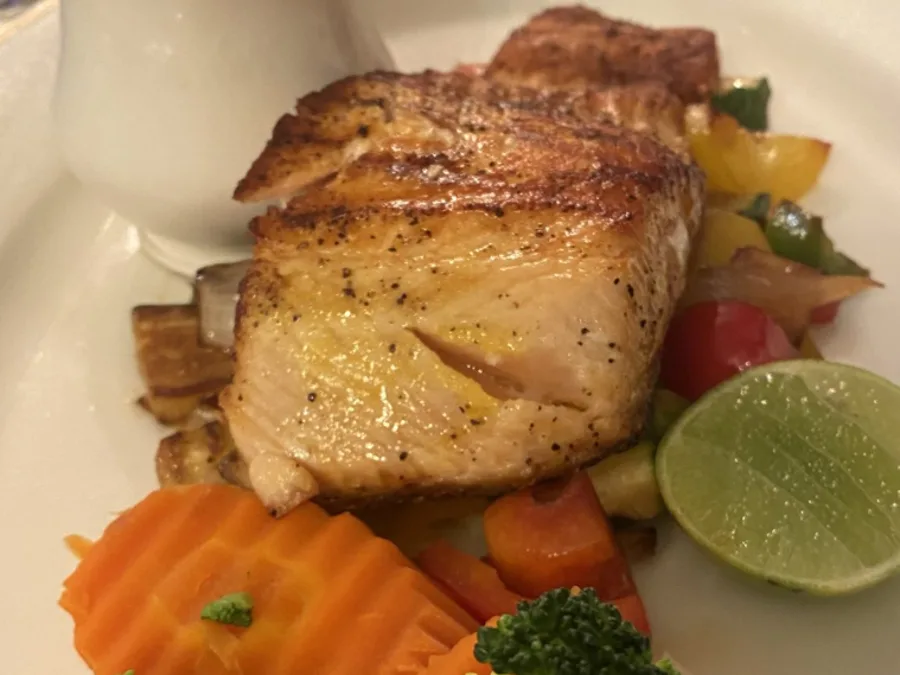
Salmon is where the air fryer quietly beats the oven. The small, fierce heat cooks a fillet in under 10 minutes, sets the top into a light glaze, and — the part nobody believes until they try it — leaves almost no lingering fish smell in the kitchen, because the cooking is enclosed and fast.
The glaze here is a two-minute whisk of Dijon mustard, lemon, garlic and dill. The mustard does three jobs: it helps the seasoning cling, it protects the surface from drying, and it mellows into something you would not identify as mustard once cooked. The salmon itself needs almost nothing else — good salt, a little pepper, and the discipline to pull it out while the centre is still slightly translucent.
That last point is the whole recipe. Salmon carries over as it rests, so a fillet that looks barely underdone in the basket will be perfectly flaky and moist at the table. Cook it until it looks 'done' in the air fryer and it will be dry by the time you sit down. Trust the thermometer (120–125°F / 49–52°C in the thickest part for medium) or the gentle flake test described below.
Why this recipe works
Salmon dries out when its proteins contract and squeeze out moisture, which happens fast above 130°F (54°C). Pulling the fillets at 120–125°F lets carryover heat finish them gently. The mustard glaze insulates the surface and its acidity balances the fish's richness, while the enclosed air fryer contains the volatile compounds that normally perfume the whole house.
Ingredients
- 4 salmon fillets, about 6 oz (170 g) each, skin-on or skinless
- 1 tbsp Dijon mustard
- 1 tbsp olive oil
- 1 tbsp lemon juice, plus lemon wedges to serve
- 1 tsp lemon zest
- 2 cloves garlic, finely grated
- 1 tbsp fresh dill, chopped (or 1 tsp dried)
- 3/4 tsp fine sea salt
- 1/4 tsp black pepper
Quantities are given in cups and grams. Nutrition (≈ 290 kcal and 34g protein per serving) is an estimate calculated from these ingredients.
Method
- Pat the salmon dry on all sides. Dry fish takes seasoning better and browns instead of steaming.
- Whisk the mustard, olive oil, lemon juice and zest, garlic, dill, salt and pepper into a glaze.
- Brush the glaze over the top and sides of each fillet. Rest 5 minutes at room temperature while the air fryer heats.
- Preheat the air fryer to 400°F (200°C) for 3 minutes. Lightly oil the basket or use a perforated parchment liner.
- Place the fillets skin-side down (if skin-on) with space between them. Air fry 7–9 minutes depending on thickness — 7 for thin fillets, 9 for thick, centre-cut pieces.
- Check doneness: the thickest part should read 120–125°F (49–52°C) for medium, and the flesh should flake under gentle pressure while still looking moist and slightly translucent in the very centre.
- Rest 3 minutes — the temperature will climb about 5 degrees — then serve with lemon wedges.
Tips for success
- **Match thicknesses.** Four similar fillets cook evenly. If one is much thinner, pull it a minute or two early.
- **Skin-on is insurance.** The skin protects the flesh from the direct heat and lifts off cleanly after cooking if you don't want to eat it.
- **No white gunk.** The white protein (albumin) that seeps out appears when salmon is overcooked or cooked from fridge-cold. The 5-minute rest at room temperature and pulling early both help.
- **Frozen fillets:** add 3–4 minutes and apply the glaze after the first 3 minutes, once the surface has thawed enough to hold it.
Serving and variations
Serve over rice with steamed greens, flaked into a Caesar-style salad, or alongside roasted potatoes and asparagus for a full dinner. Swap the dill for a miso-maple glaze (1 tbsp miso, 1 tbsp maple syrup, 1 tsp soy) for a completely different, equally reliable version.
Storage
Refrigerate up to 2 days. Flake leftovers cold over salads or into pasta — reheating salmon almost always overcooks it. If you must reheat, use 300°F (150°C) for 4 minutes.
Frequently asked questions
How long do you cook salmon in an air fryer?
At 400°F (200°C), a 1-inch (2.5 cm) fillet takes 7–9 minutes. Thin tail pieces can be done in 6. Start checking at 7 minutes — thickness matters more than weight.
Should salmon be skin-side up or down in the air fryer?
Skin-side down. The skin acts as a heat shield, keeps the flesh moist, and stops the fillet sticking to the basket. Serve it skin-on, or slide a spatula between skin and flesh to leave it behind.
How do I know air fryer salmon is done without a thermometer?
Press the thickest part gently with a fork. It should separate into flakes but still look glossy and slightly darker in the centre. If it flakes into dry, pale pieces at the slightest touch, it has gone too far.
Why does my air fryer salmon dry out?
Overcooking by even 2 minutes is the usual cause, followed by cooking straight from the fridge. Rest the fillets 5–10 minutes before cooking and pull them at 120–125°F (49–52°C); carryover heat finishes the job.
Can I cook frozen salmon in the air fryer?
Yes — cook from frozen at 400°F (200°C) for 10–12 minutes. Brush the glaze on after 3 minutes, when the surface has thawed, and check the centre with a thermometer before serving.