Pulled pork is the highest reward-to-effort recipe in slow cooking. Ten minutes of work in the morning — a rub, an onion, a splash of liquid — and by evening you have a mountain of smoky, tender pork that shreds with two forks and feeds a crowd, or one family across several completely different dinners.
The rub does the heavy lifting: brown sugar for caramelised edges, smoked paprika and cumin for the barbecue character, mustard powder and garlic underneath. There is no barbecue sauce in the cooker — sauce added at the start just dilutes. Instead, the pork braises in its own juices with a little stock and vinegar, and you toss the shredded meat back through those concentrated juices. Sauce is a table decision, not a cooking one.
Choose the right cut and the recipe cannot really fail. Pork shoulder (sold as butt or picnic) is marbled with the fat and collagen that melt over nine hours. A lean loin roast will shred, but dryly — it is simply the wrong tool for this job. Buy the shoulder, ideally bone-in, and buy big: leftovers are the entire point.
Why this recipe works
Pulled pork depends on two slow transformations: collagen converting to gelatin (which is what makes the meat shred and feel moist) and fat rendering out of the shoulder. The small amount of added liquid keeps the environment steamy without diluting the pork's own juices, and cooking fat-side up lets the rendering cap baste the meat continuously. The vinegar in the braise balances the fat and sharpens the rub's spices.
Ingredients
- 4–5 lb (1.8–2.3 kg) pork shoulder (butt), bone-in or boneless
- 3 tbsp brown sugar
- 1 tbsp smoked paprika
- 1 tbsp fine sea salt
- 2 tsp garlic powder
- 2 tsp mustard powder
- 1 tsp ground cumin
- 1 tsp black pepper
- 1/2 tsp cayenne (optional)
- 1 large onion, thickly sliced
- 1/2 cup (120 ml) chicken stock
- 2 tbsp apple cider vinegar
- To serve: soft buns, coleslaw, barbecue sauce
Quantities are given in cups and grams. Nutrition (≈ 350 kcal and 34g protein per serving) is an estimate calculated from these ingredients.
Method
- Mix the brown sugar, paprika, salt, garlic powder, mustard powder, cumin, pepper and cayenne into a dry rub.
- Pat the pork dry and coat it all over with the rub, pressing it in. Rest at room temperature while you prepare the cooker (or rub and refrigerate overnight for deeper flavour).
- Scatter the onion slices over the base of the slow cooker. Pour in the stock and vinegar.
- Set the pork on the onions, fat-side up. Cover and cook on LOW for 9–10 hours (or HIGH for 5–6), until the meat collapses when pressed and shreds effortlessly.
- Lift the pork onto a board (discard the bone if present). Shred with two forks, discarding large pieces of fat.
- Skim the fat from the cooking juices, then toss the shredded pork with about a cup of the juices until glossy and moist. Season to taste.
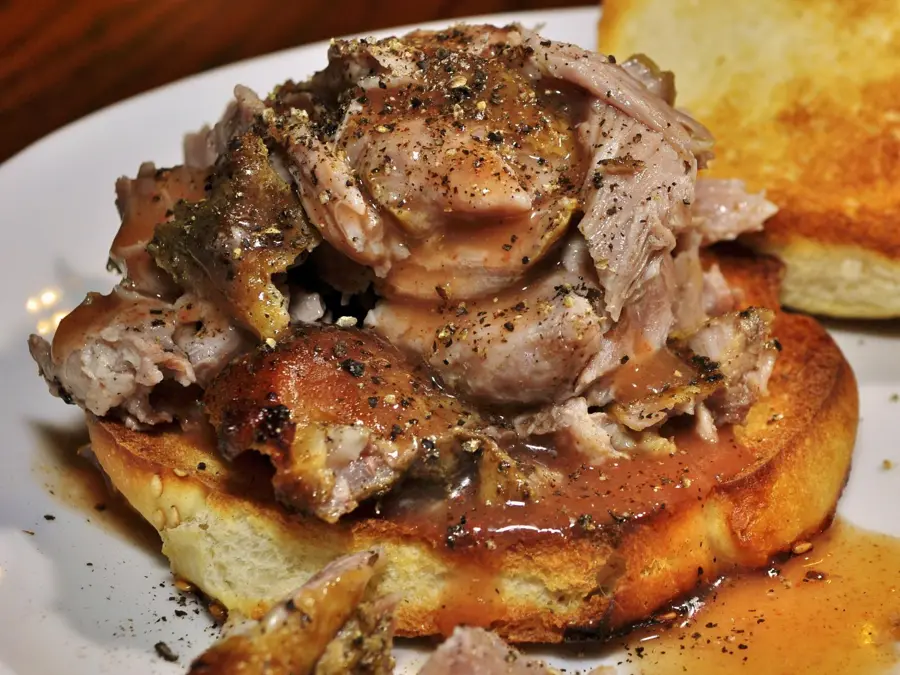
- Serve piled onto buns with coleslaw and barbecue sauce — or over rice, in tacos, or on nachos.
Tips for success
- **Fat-side up** so the cap bastes the meat as it renders down through the joint.
- **Crisp edges (carnitas-style):** spread shredded pork on a tray and grill/broil 4–5 minutes before serving for lacy, crispy bits.
- **Don't drown it.** Half a cup of liquid is plenty — the pork releases a great deal of its own juice, and too much liquid boils rather than braises.
- **Rest before shredding** — 15 minutes under foil keeps the meat juicier.
Serving and variations
The classic plate is buns, coleslaw and pickles, but the same pork fills tacos with onion and coriander, tops nachos and baked potatoes, or stirs through mac and cheese. Freeze portions flat in bags with their juices — they thaw fast and reheat like fresh.
Storage
Refrigerate in its juices up to 4 days; freeze in portions (with a spoonful of juice each) up to 3 months. Reheat covered with a splash of the juices.
Frequently asked questions
What is the best cut of pork for slow cooker pulled pork?
Pork shoulder — sold as Boston butt or picnic shoulder. Its fat and connective tissue melt over the long cook and keep the meat moist. Avoid loin: it is too lean and shreds into dry strings no matter how long you cook it.
How long does pulled pork take in a slow cooker?
A 4–5 lb shoulder takes 9–10 hours on LOW or 5–6 hours on HIGH. It is done when it yields completely — the meat should shred with almost no resistance from two forks, and a bone-in joint will slide clean out.
Should pulled pork be cooked in barbecue sauce?
No. Sauce in the cooker dilutes the pork's own concentrated juices and can taste flat after hours of cooking. Season with a rub, braise in a little stock and vinegar, toss the shredded meat in its juices, and let everyone sauce their own at the table.
Why is my pulled pork tough even after hours of cooking?
It is underdone, not overdone — pulled pork passes through a tough phase before the collagen melts. Give it another hour on LOW and test again. Toughness in shoulder almost always means it needs more time, not less.
Can I make pulled pork ahead for a party?
It is one of the best make-ahead mains there is. Cook and shred it the day before, refrigerate it in its juices, and reheat gently in a covered pot with the juices. Many people prefer day-two pulled pork — the flavours settle in.