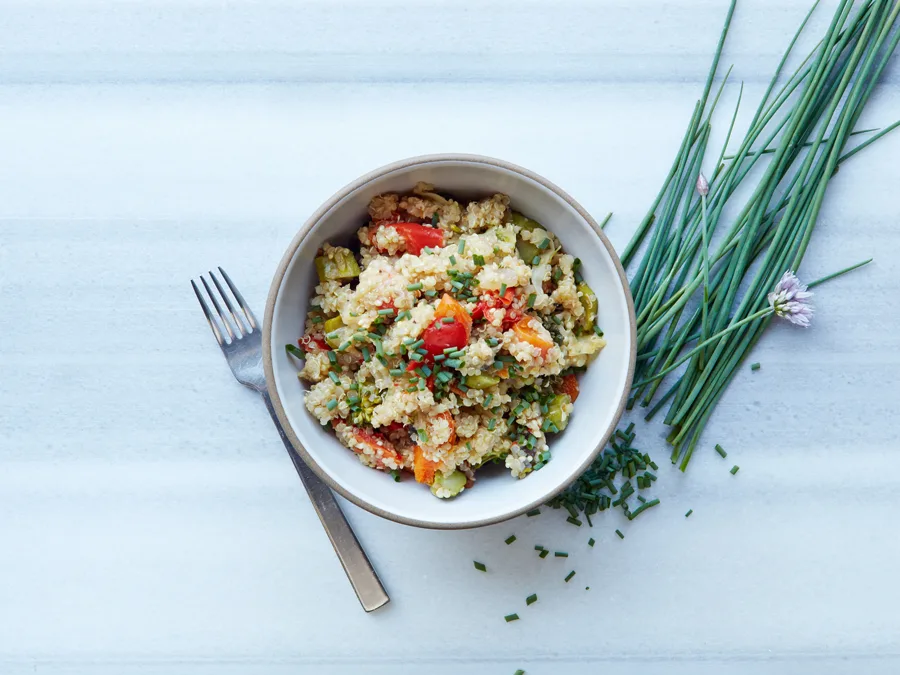
The grain bowl formula — grain, protein, vegetables, sauce — is only as good as its sauce, and this one is built around a tahini-lemon dressing you will want on everything: nutty, sharp, garlicky, and thin enough to drizzle. Under it, quinoa and salmon deliver a genuinely high-protein bowl (around 42 grams) that eats like a restaurant lunch, not a compromise.
Quinoa's only flaw is that it is often cooked like rice and served soggy. The fix is simple: rinse it, use a 1:1.5 quinoa-to-water ratio, and — the part everyone skips — let it rest, covered and off the heat, for 10 minutes, then fluff. The grains separate, the texture turns light, and the bowl improves out of proportion to the effort.
Roasted chickpeas bring crunch and extra protein, the vegetables bring colour and sweetness, and the salmon, cooked with a crisp skin, brings the richness. It is a bowl with actual contrast in every bite, which is what separates a good grain bowl from a virtuous chore.
Why this recipe works
Quinoa's bitterness comes from saponin, a natural coating that rinsing removes. Its fluffy texture comes from the rest: as the grains sit in their own steam, moisture redistributes evenly instead of pooling at the base. The tahini dressing seizes when acid first hits it because the sesame proteins tighten; adding water gradually relaxes them into a pourable emulsion — the same principle as making mayonnaise, in reverse.
Ingredients
- 1 cup (170 g) quinoa, rinsed
- 1.5 cups (360 ml) water or stock
- 1/2 tsp fine sea salt, plus more for the salmon
- 4 salmon fillets, about 6 oz (170 g) each, skin-on
- 1 tbsp olive oil, plus 1 tsp for the chickpeas
- 1 can (15 oz / 425 g) chickpeas, drained, rinsed and dried
- 1 tsp smoked paprika, divided
- 2 cups (60 g) baby spinach or chopped kale
- 1 cucumber, diced
- 1 cup (150 g) cherry tomatoes, halved
- 1 avocado, sliced
- For the dressing: 1/4 cup (60 g) tahini, juice of 1 lemon, 1 small clove garlic (grated), 1 tsp honey or maple syrup, 3–5 tbsp cold water, salt to taste
Quantities are given in cups and grams. Nutrition (≈ 590 kcal and 42g protein per serving) is an estimate calculated from these ingredients.
Method
- Cook the quinoa: combine quinoa, water/stock and 1/2 tsp salt in a pot, bring to a boil, cover, and simmer on low for 15 minutes. Take off the heat and rest, covered, for 10 minutes, then fluff with a fork.
- Meanwhile, heat the oven to 425°F (220°C). Toss the chickpeas with 1 tsp oil, half the paprika and a pinch of salt; roast on a tray for 18–20 minutes until crisp at the edges. (Or crisp them in a dry pan for 8–10 minutes.)
- Whisk the tahini, lemon juice, garlic, honey and a pinch of salt. Add cold water a spoonful at a time until it pours like single cream — it will seize at first, then loosen. Keep whisking.
- Pat the salmon very dry, season with salt and the remaining paprika. Heat 1 tbsp oil in a pan over medium-high heat and cook the salmon skin-side down for 6 minutes without moving it, then flip for 1–2 minutes, until just cooked through.
- Build the bowls: quinoa, spinach, cucumber, tomatoes, chickpeas and avocado, with a salmon fillet on top.
- Drizzle generously with the tahini dressing and serve with lemon wedges if you have them.
Tips for success
- **Rest the quinoa.** Ten covered minutes off the heat is the difference between fluffy grains and a wet porridge.
- **Tahini dressing always seizes first** — it tightens into a paste when the lemon hits, then loosens as you add cold water and whisk. Trust the process and add water gradually.
- **Dry chickpeas crisp; wet chickpeas steam.** Pat them properly dry after rinsing, or even leave them on a towel for 10 minutes.
- **Meal prep:** keep the dressing separate and add avocado fresh; the rest holds 3 days.
Serving and variations
Serve warm or at room temperature — it is one of the few composed bowls that works both ways. Swap salmon for roasted chickpeas alone (vegan), grilled chicken, or a jammy egg. The tahini dressing keeps for a week and improves salads, roasted vegetables and grain bowls of every kind.
Storage
Components keep 3 days refrigerated, stored separately. Salmon is best fresh but reheats gently at low heat; the bowls also work with the salmon served at room temperature.
Frequently asked questions
How much protein is in a salmon quinoa bowl?
Around 42g per bowl: roughly 34g from a 6 oz salmon fillet, 6g from a cup of cooked quinoa, and a few grams from the chickpeas and tahini. It is one of the highest-protein grain bowls you can build without supplements.
Why is my quinoa mushy?
Too much water, or no rest. Quinoa needs a 1:1.5 ratio (quinoa to water), a full 15 minutes of gentle simmering, and then 10 minutes resting off the heat with the lid on. Rinsing before cooking also removes the bitter coating and helps the grains stay separate.
How do I get crispy skin on salmon?
Dry skin, a properly hot pan, and patience: press the fillet down gently for the first 10 seconds, then leave it completely alone for 6 minutes skin-side down. The skin releases itself when it is crisp — if it sticks, it is not ready.
Can I make the tahini dressing ahead?
Yes — it keeps a week in the fridge in a jar. It thickens as it sits, so whisk in a spoonful of cold water before serving. The lemon and garlic flavours actually meld and improve after a day.
What can I substitute for quinoa in these bowls?
Brown rice, bulgur wheat, couscous or farro all work with the same bowl formula. Adjust the cooking liquid and time to the grain, and keep the dressing and toppings identical — the formula is the recipe.