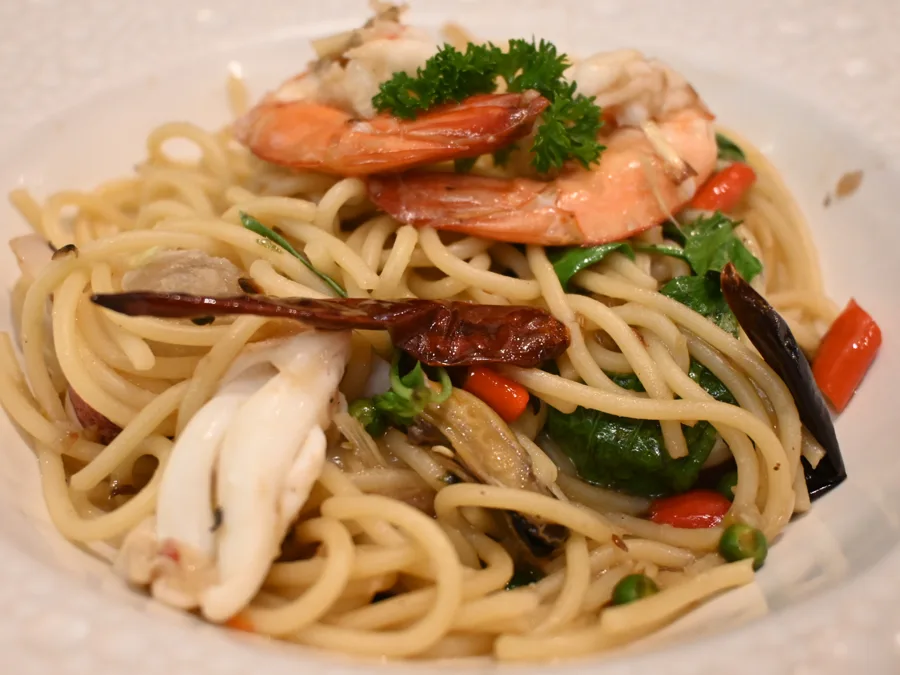
This is the dinner to cook when you want something that tastes like a restaurant but you have twenty minutes and one burst of energy. Shrimp cook in three minutes, pasta in ten, and the sauce is nothing more than garlic butter loosened with starchy pasta water and lemon — yet the result is glossy, rich and completely convincing.
The technique is all in the sequencing. The shrimp go into a hot pan alone, in a single layer, and are left strictly untouched for the first minute so they take on a golden sear instead of steaming in their own juices. They come out before they are quite done. The garlic then blooms in the same pan's butter, the pasta water goes in to emulsify, and the shrimp return for a final 30 seconds to finish in the sauce.
Use the biggest shrimp you can justify — 16/20 count if possible. Small shrimp overcook in the time it takes to sear them and disappear into the pasta. Big ones stay plump, sweet and distinct, and they make the dish feel like the occasion it secretly is.
Why this recipe works
Shrimp cook in minutes because their muscle fibres are short and their connective tissue is minimal — the window between raw and rubbery is genuinely about 60 seconds. The sauce works because pasta water contains dissolved starch, a natural emulsifier that binds butter fat and lemon juice into a stable, glossy coating instead of a broken, oily puddle.
Ingredients
- 12 oz (340 g) spaghetti or linguine
- 1.25 lb (570 g) large raw shrimp, peeled and deveined
- 1 tsp fine sea salt, divided, plus more for the pasta water
- 1/2 tsp black pepper
- 1/2 tsp smoked paprika
- 2 tbsp olive oil
- 4 tbsp (55 g) butter
- 5 cloves garlic, thinly sliced
- 1/4 tsp chilli flakes (optional)
- Zest and juice of 1 lemon
- 1/3 cup (30 g) finely grated parmesan, plus more to serve
- 1/4 cup chopped fresh parsley
Quantities are given in cups and grams. Nutrition (≈ 520 kcal and 32g protein per serving) is an estimate calculated from these ingredients.
Method
- Cook the pasta in well-salted boiling water until just shy of al dente. Before draining, reserve 1.5 cups of the pasta water — this is your sauce base.
- Meanwhile, pat the shrimp very dry and season with half the salt, the pepper and paprika.
- Heat the olive oil in a large pan over high heat until shimmering. Add the shrimp in a single layer and cook undisturbed for 1 minute. Flip and cook 30–60 seconds more, until just pink. Transfer to a plate — they will finish in the sauce.
- Lower the heat to medium. Melt the butter in the same pan, add the garlic and chilli flakes, and cook 1 minute until fragrant and just golden at the edges.
- Add 1 cup of the reserved pasta water and the lemon zest and juice. Simmer 1 minute, swirling the pan, until slightly glossy.
- Add the drained pasta to the pan and toss vigorously for 1–2 minutes, adding more pasta water as needed, until the sauce clings to every strand.
- Return the shrimp and any juices, toss 30 seconds, then remove from the heat. Stir in the parmesan and parsley, adjust salt, and serve immediately in warm bowls.
Tips for success
- **Dry shrimp sear; wet shrimp steam.** Two paper towels and 30 seconds of effort make the difference between golden and grey.
- **Pasta water is liquid gold** — its starch is what turns butter and lemon into a sauce that coats instead of pools. Always reserve more than you think you need.
- **Don't cook the garlic past pale gold.** Sliced garlic goes bitter quickly; if it darkens, the sauce will taste it.
- **Swap the protein:** scallops follow the same timings; chicken needs 6–7 minutes and should be sliced thin.
Serving and variations
Serve with a green salad and garlic bread for a complete restaurant-style dinner. Add a handful of halved cherry tomatoes with the garlic for a summer version, or a big handful of spinach at the end to wilt into the sauce. A pinch of lemon zest over each bowl at the table wakes everything up.
Storage
Best eaten immediately. Leftovers keep 1 day refrigerated and reheat gently in a pan with a splash of water — the shrimp will firm up, but the flavour holds.
Frequently asked questions
How do I stop shrimp from going rubbery?
Cook them hot and fast, and pull them before they look fully done — they finish in the warm sauce. Shrimp are cooked when they form a loose 'C'; a tight 'O' curl means they have gone too far. Starting with dry, room-temperature-ish shrimp also helps them sear instead of boil.
Why do you save pasta water for the sauce?
Pasta water is full of dissolved starch, which emulsifies butter and lemon juice into a glossy sauce that clings to the noodles instead of sliding off. Plain water or stock won't do it. About a cup, added gradually while tossing, is right for this recipe.
Can I use frozen shrimp for garlic butter pasta?
Yes — thaw them fully first (15 minutes in cold water), then drain and pat very dry. Cooking shrimp from frozen releases too much water into the pan and they will steam rather than sear.
What pasta shape works best with shrimp?
Long shapes — spaghetti, linguine, fettuccine — are classic because the sauce coats strands evenly and the shrimp sit on top. Short shapes like penne work too and are easier for kids; the method and sauce quantities are unchanged.
Can I make this without butter?
You can use all olive oil (6 tbsp total) for a lighter, more Mediterranean version — the sauce will be less rich but the pasta water still gives it body. Add the lemon at the very end to keep it bright.